
Understanding the Cost Dynamics of Software Development
In the ever-evolving landscape of technology, businesses frequently face the dilemma of whether to build custom software or to opt for Software as a Service (SaaS) solutions. This decision often arises following a renewal notice or a significant price increase, prompting a reevaluation of long-term costs. While the initial allure of SaaS may seem economically favorable, a deeper analysis reveals that building software can sometimes offer substantial savings, particularly when aligned with specific business needs.

The Impact of SaaS Price Increases
When a SaaS provider announces a price hike, it starkly highlights the lack of control businesses have over their software expenses. Companies that initially found value in a subscription may reconsider when their user base expands or when they require additional features. The core issue is not necessarily the pricing of SaaS but whether the business is fully leveraging the extensive features offered.
- Assess the actual usage of features versus the cost incurred.
- Identify triggers for dissatisfaction: is it a renewal increase, a growing team, or inadequate functionality?
Comparing Costs: SaaS vs. Custom Software
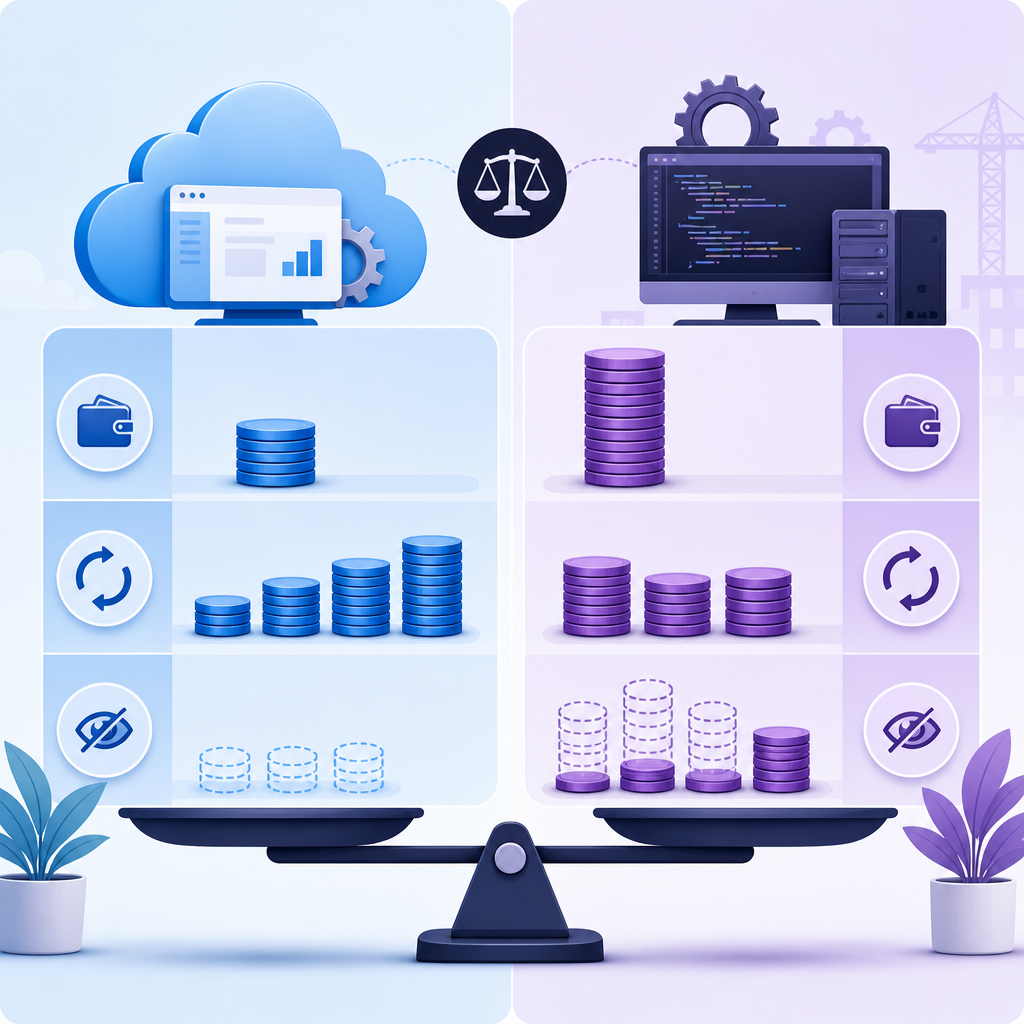
To make an informed decision, businesses must compare the total cost of ownership of SaaS against that of custom software. SaaS typically offers low upfront costs with predictable monthly fees, while custom software requires a significant initial investment followed by ongoing expenses for hosting, maintenance, and updates.
Key Cost Factors to Consider
A comprehensive comparison should include:
- Subscription fees based on user count and features.
- Additional costs for integrations, support, and data migration.
- Custom development costs, including design and testing.
- Ongoing maintenance and cloud infrastructure expenses.
When Building Software Makes Financial Sense
Building custom software can be more cost-effective under certain conditions, particularly when:
- Recurring licensing fees become prohibitively high.
- Multiple SaaS products are needed to achieve a single workflow.
- Manual processes are frequently repeated, leading to inefficiencies.
- Integrations are either unavailable or costly through existing vendors.
- The business anticipates using the software for several years.
When SaaS Remains the Better Option
Despite the potential benefits of custom software, there are scenarios where SaaS is the more prudent choice:
- Immediate deployment is necessary, and funding for development is unavailable.
- Business requirements are fluid and cannot be easily defined.
- The vendor manages complex compliance and security requirements.
- Subscription costs remain manageable for a small user base.
Hidden Costs of Custom Software Development
Many businesses overlook ongoing costs associated with custom software, which can include:
- Cloud hosting and third-party API usage fees.
- Regular security updates and maintenance.
- User support and training expenses.
- Compatibility testing across various platforms.
Calculating the Break-Even Point
To determine if custom software is a viable alternative to SaaS, businesses should conduct a total cost of ownership analysis over three to five years. This involves:
- Gathering actual costs for SaaS subscriptions, including all add-ons.
- Estimating development and operational costs for custom software.
- Projecting future expenses based on expected growth.
Getting an Independent Assessment
Engaging in an independent assessment can clarify whether to build custom software, continue with SaaS, or adopt a hybrid approach. This process involves mapping existing workflows and identifying areas for improvement, ultimately leading to a more informed decision.
Conclusion
The decision to build software or subscribe to SaaS is not merely a financial one; it encompasses strategic considerations about control, scalability, and operational efficiency. By carefully evaluating the costs and benefits of each option, businesses can make a choice that aligns with their long-term goals and operational needs.